Creative Direction · Campaign Concepts · Visual Storytelling
Brand + Content Design
A curated collection of campaign concepts, brand systems, content design and visual storytelling. The common thread is audience judgement: understanding what already feels native, then creating something distinctive enough to earn attention.
Dinàra by Dina
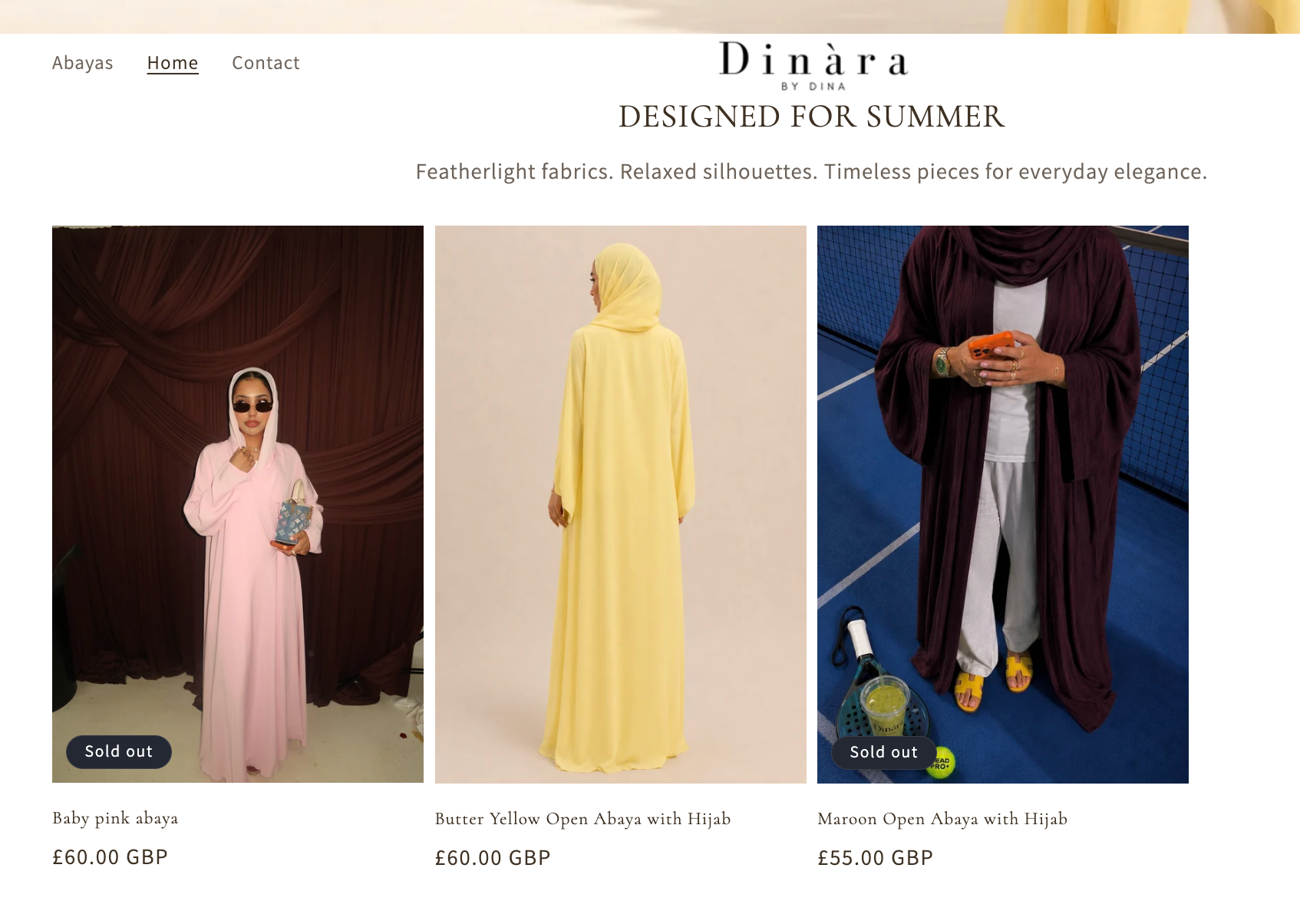
I built Dinàra by Dina as my own ecommerce business, giving me direct ownership of the full customer journey rather than working on one isolated part of a product. The work spans product presentation, ecommerce UX, merchandising, visual identity, catalogue structure and the practical decisions required to turn an idea into a functioning online shop.
What makes this project especially useful as a product case study is the direct link between each design decision and a real customer or commercial consequence. Product naming needs to be understandable, photography needs to communicate fit and finish, navigation needs to help shoppers move without friction, and the website has to balance brand personality with conversion. It is a live environment where design choices immediately affect how a customer perceives and uses the product.
 Open the live Dinàra website
Kayali · Which One Are You?
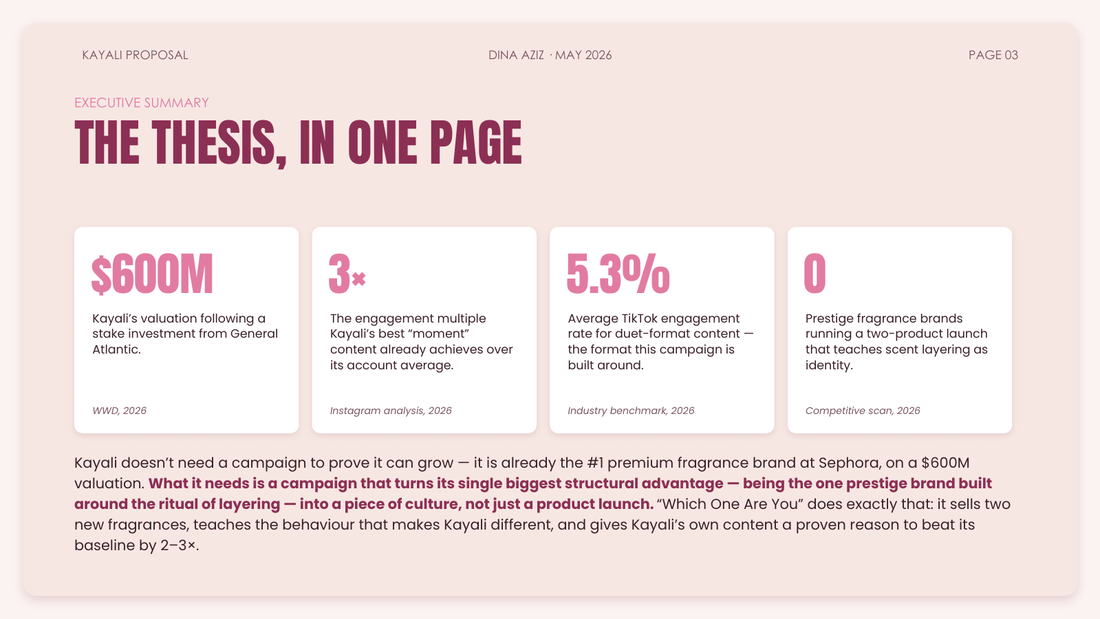
This concept began with brand observation rather than a blank moodboard. I studied KAYALI's Instagram, campaign behaviour, product language and the way fragrance layering already functions as part of the brand identity. The question became: what would feel unmistakably KAYALI while still creating a new behaviour people could participate in?
That led to a simple product style premise: two moods, two fragrances, one choice. I designed the system to work across film, social, Sephora retail, out of home and CRM without needing a different idea for every channel. The goal was not just visual consistency. It was to create one recognisable interaction that could be repeated wherever the customer met the launch.
I repeatedly pressure tested the idea against the brand rather than against my own taste. I looked at what the audience already understands, what visual language would feel native to the feed, where curiosity could replace explanation and how the concept could invite participation rather than simply show another perfume bottle.
I later shared the concept with members of the KAYALI team and gave permission for it to be used as inspiration. I was not commissioned or hired for subsequent brand work, so I do not claim ownership of later campaigns. What matters to me is that the exercise demonstrated my ability to infer a product and brand language from behaviour, build a coherent system around it and communicate an idea strongly enough to be taken seriously by the team it was designed for.

Family first reformer Pilates proposal
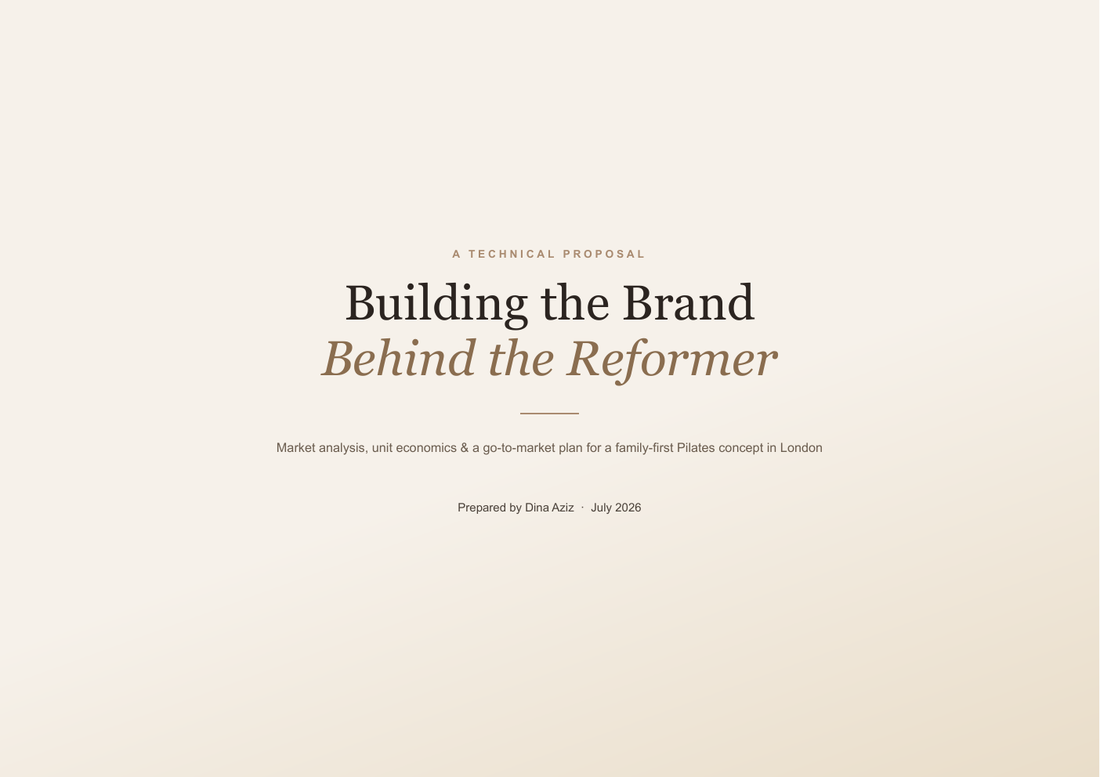
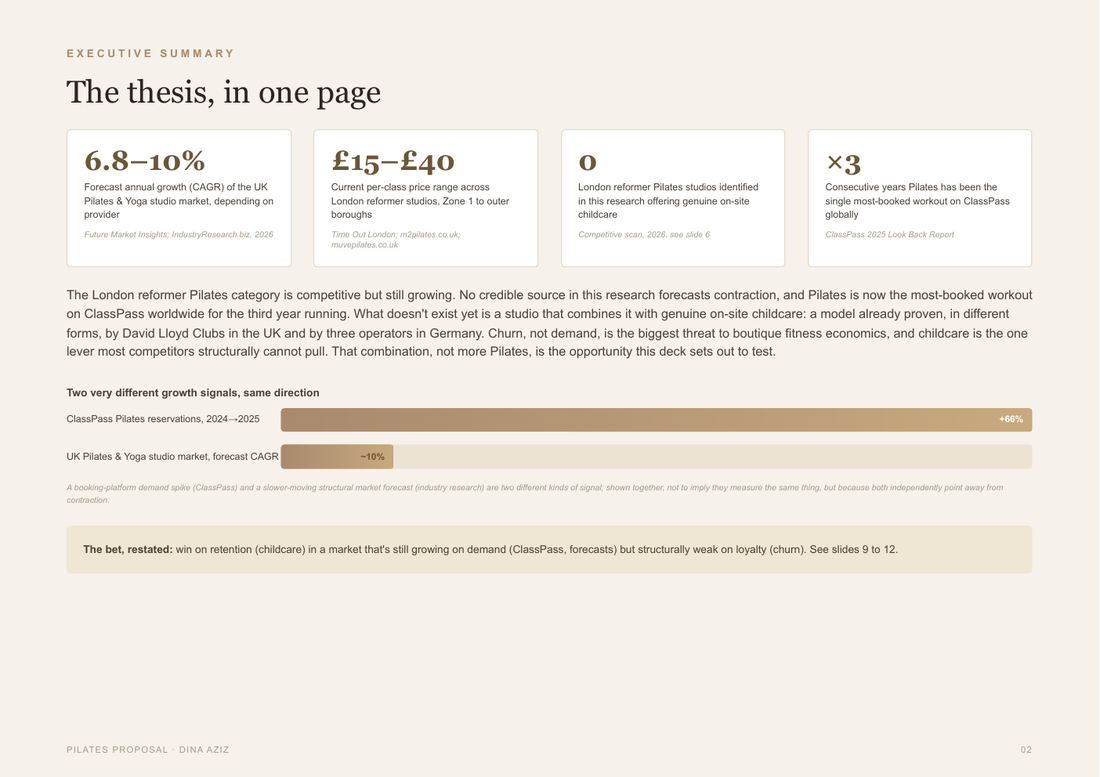
This 22 page technical proposal tests whether a family first reformer Pilates concept could occupy a genuine whitespace in London rather than becoming another generic boutique studio. The work deliberately treats the idea as an investment question. It covers market sizing, source disagreement, saturation, competitors, pricing, unit economics, aggregator economics, international childcare precedents, local case studies, retention logic and a phased launch plan.
The most important insight is structural rather than aesthetic. London is competitive, but the research found no direct London comparator offering genuine on site childcare as the core proposition. The proposal therefore frames childcare as a retention mechanism that competitors cannot easily copy, not as a decorative add on. It also makes the uncertainty visible: market size sources disagree, assumptions need real site and staffing costs, and the next step is to replace benchmark economics with live London quotes before treating the model as investment grade.
TfL PMO portfolio health analysis
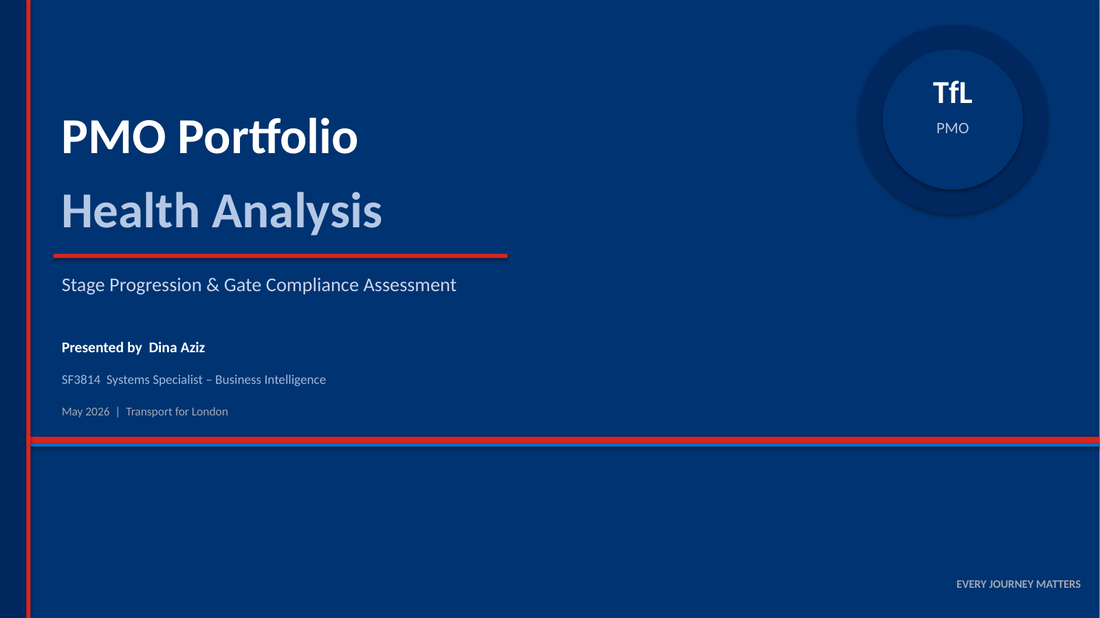
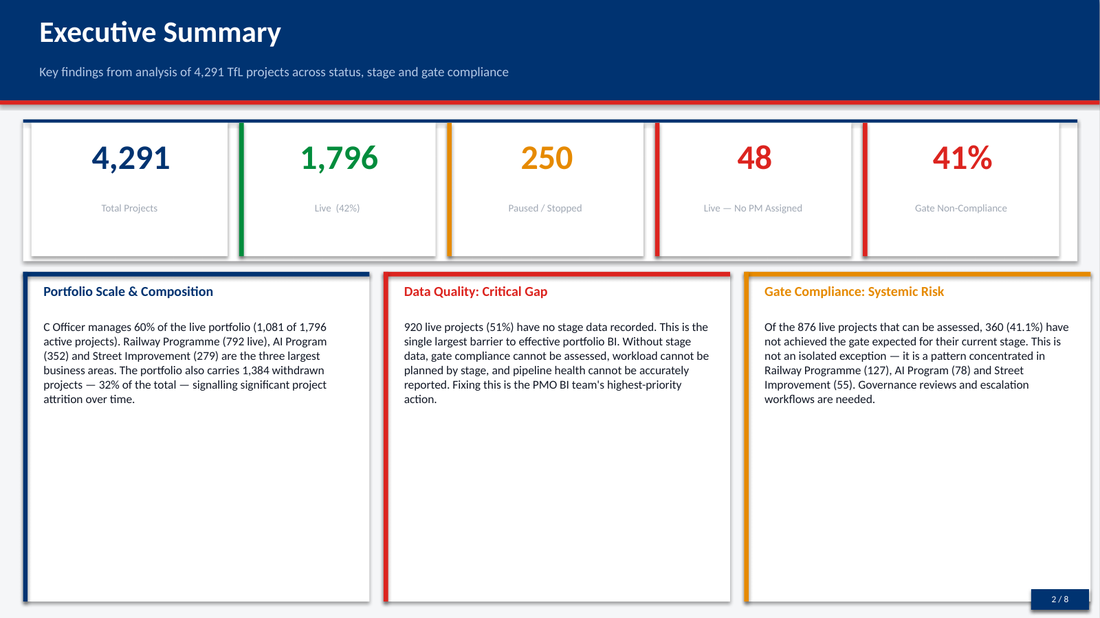
This portfolio analysis assesses 4,291 TfL projects through status, lifecycle stage and governance gate compliance. The work moves beyond reporting totals by identifying the data quality problems that make portfolio management less reliable. Of 1,796 live projects, 920 had no stage data recorded, which meant more than half of live delivery could not be assessed properly for gate compliance. Among the 876 projects that could be assessed, 360 were non compliant with the gate expected for their current stage.
I translated those findings into operational recommendations rather than leaving them as dashboard observations. The proposal recommends mandatory stage capture, a retrospective data cleanse, a live gate compliance Power BI dashboard, automated PM coverage and escalation, stalled project workflows and mapping for legacy stage codes. That turns BI from a descriptive layer into a governance mechanism that can change behaviour and accountability.
Ramadan lookbook
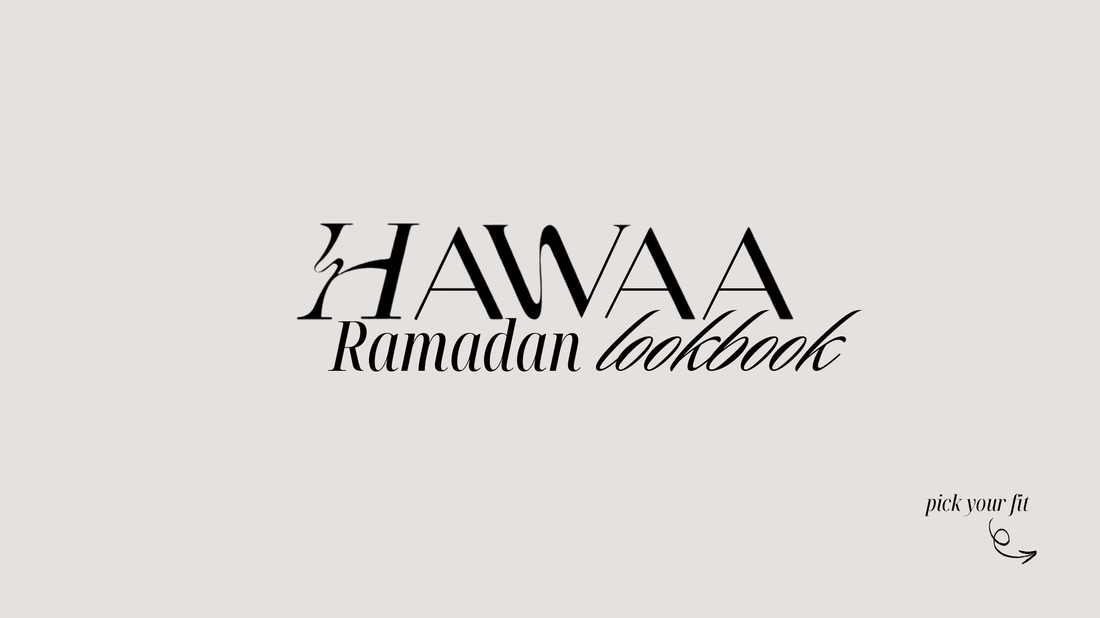
This lookbook shows another side of my design work: presenting a product range clearly, grouping items into a coherent collection and making catalogue navigation visually simple. It supports product communication by combining fashion imagery, naming and range structure into a format that is easy to browse like a set of slides.
JP Morgan proposal
This proposal demonstrates structured communication for stakeholder audiences. The deck translates planning, logistics, priorities and commercial thinking into a clear presentation format rather than leaving the idea as a loose concept.

Editorial, event and visual systems
These smaller projects show a different side of the same skill set: taking a vague brief, organising information, choosing what matters and giving the final output a structure someone else can actually use.
JP Morgan event planning proposal
A structured event concept focused on stakeholder confidence, delivery planning, logistics, budget awareness and turning strategic goals into a usable event framework.
Ramadan product lookbook
A visual merchandising document organising hijabs and abayas into clear ranges, product numbers, styles and sizing so a broad catalogue can be browsed quickly.
Travel itinerary systems
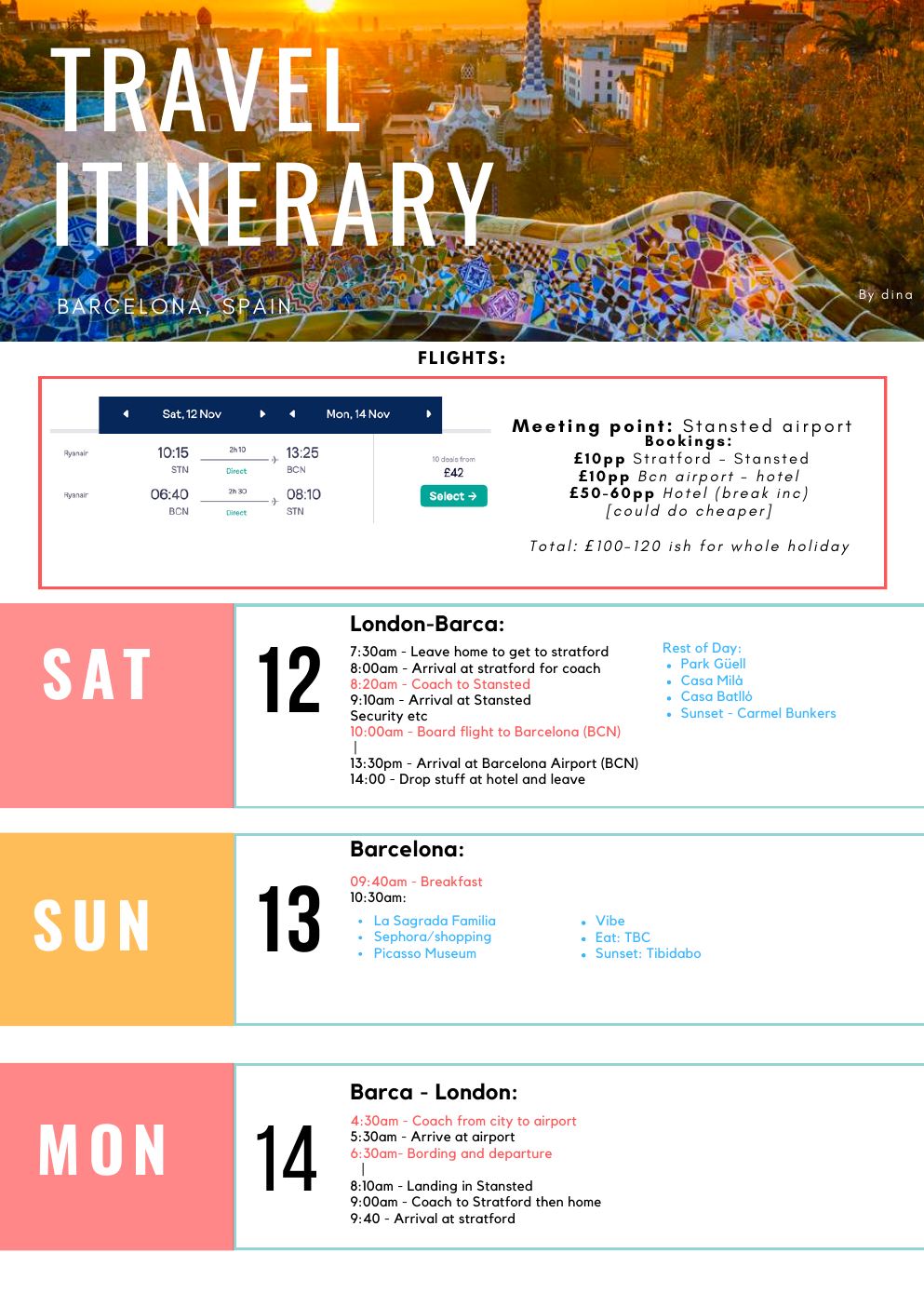
Detailed visual itineraries for Barcelona, Marseille and Italy combining timing, routing, transport, bookings, budgets and destination priorities into compact operational plans.