Rebuilding without overwhelm
Someone trying to reconnect with Islam who wants a calm route back into Qur'an, prayer and learning without being confronted by guilt heavy streaks or an impossible checklist.
Product Design · UX Strategy · Islamic Digital Product
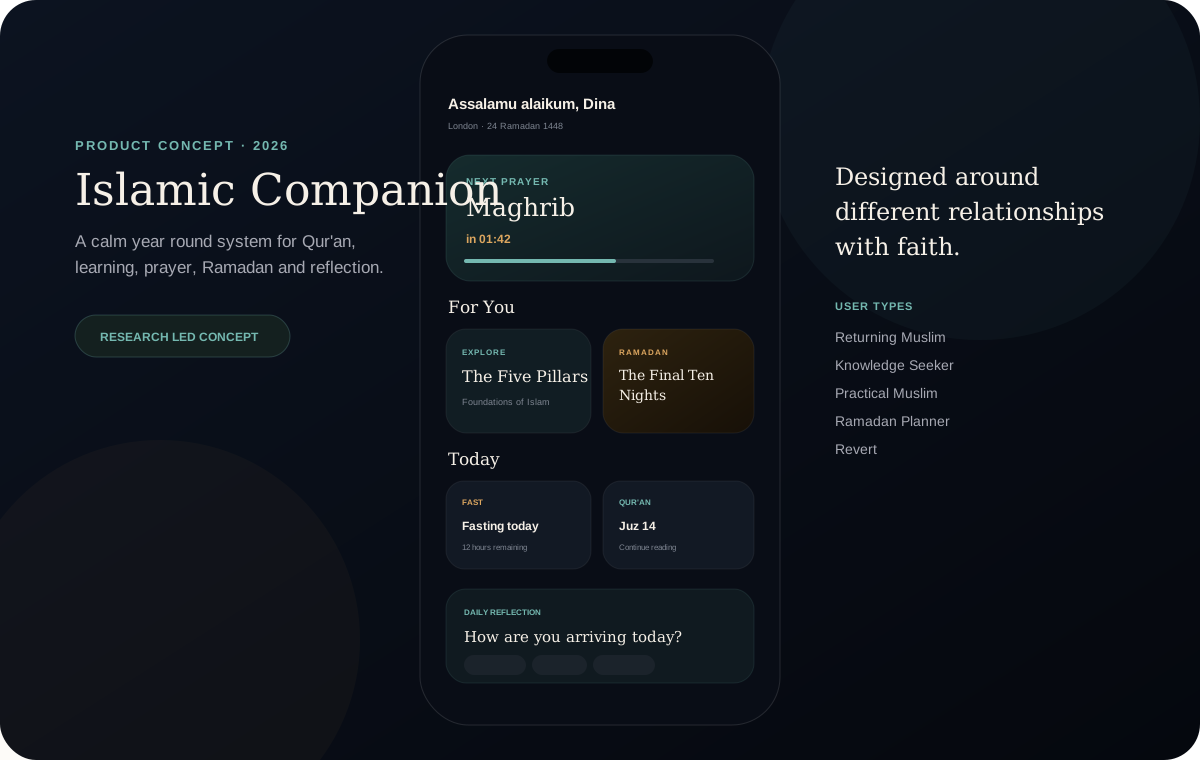
A year round Muslim companion concept built from the thinking behind my Ramadan Planner: one calm place for Qur'an, Islamic learning, prayer guidance, trusted search, reflection and optional spiritual organisation.
Origin
The starting point was my existing Ramadan Planner, which already brings together fasting, salah, Qur'an, reflection, planning and practical guidance. The digital question was bigger: what would this become if it did not stop at Ramadan?
I reframed the opportunity around fragmentation. A Muslim may use one app for Qur'an, another for prayer times, Spotify or YouTube for lectures, browser search for hadith, notes for personal duas and a separate planner during Ramadan. The product hypothesis is that some of those moments can be connected without turning worship into another productivity dashboard.
This is a hypothesis to validate, not a claimed research finding.
Audience
The audience is intentionally behavioural rather than demographic. Faith, confidence and Islamic knowledge do not map neatly to age or background, so I defined provisional user types around the jobs people are trying to complete.
Someone trying to reconnect with Islam who wants a calm route back into Qur'an, prayer and learning without being confronted by guilt heavy streaks or an impossible checklist.
Regularly listens to lectures, saves Islamic content and wants to organise useful material by theme, return to it later and connect it with Qur'an, hadith and personal notes.
Usually opens an Islamic product for a specific job: prayer time, a hadith, wudhu, a ruling, a dua, an ayah or quick contextual guidance in the middle of everyday life.
Wants fasting, Qur'an, salah, iftar, suhoor, reflection and the last ten nights in one flexible place, then returns to a lighter year round experience afterwards.
Benefits from step by step wudhu and salah guidance, plain language definitions, source transparency and navigation that does not assume years of prior knowledge.
These are provisional behavioural archetypes for research and concept testing. They are not presented as validated personas.
Core needs
Product architecture
The concept uses five primary destinations: Home, Qur'an, Qur'an recognition, Anecdote and Library. The Five Pillars exist as a meaningful hub rather than forcing the whole information architecture into a religious taxonomy that users may not naturally navigate.
Contextual next prayer, personalised learning, Qur'an continuity, reflection and optional Ramadan or tracking information.
Reader, audio, tafsir, saved ayat, notes, historical timeline and recognition from live recitation.
A personal library for lectures and podcasts organised around themes such as tawakkul, grief, marriage, purpose and salah.
Hadith search, Ask Noor, adhkar, dhikr, wudhu, salah, Five Pillars, Ramadan, Hajj and Umrah, protection resources and saved content.
Design principle
One of the most important product decisions is not a component. It is permission to remove components. Some users find tracking motivating. Others experience it as pressure or feel that worship should not be turned into a streak.
If tracking is off, the product prioritises prayer times, Qur'an, learning, saved content and contextual guidance instead of completion percentages.
Feature ecosystem
Reader, translation, tafsir, audio, notes, timeline and a microphone concept for identifying the Surah and ayah being recited.
Theme based collections for Spotify, YouTube and podcast content with saved notes and timestamped reflections.
Search designed around source visibility, grading where available, fiqh context and explicit uncertainty rather than confident sounding unsupported answers.
Shahadah, salah, Zakah planning, year round fasting and Hajj or Umrah preparation without presenting pillars as badges to complete.
Fasting, Juz progress, reflection, iftar, suhoor, last ten nights, Laylatul Qadr and personal dua planning inherited from the physical planner.
Countdowns and contextual guidance for Ramadan, Eid, Zakah, Hajj, Umrah and events such as eclipses where Islamic practice may be relevant.
Research
I have deliberately kept the concept research honest. The prototype contains hypotheses, not fabricated interviews or invented percentages. The highest risk questions are behavioural and trust related.
Research plan
12 to 18 participants across different levels of practice, Islamic knowledge, app use and attitudes toward tracking.
Seven days documenting real moments of Islamic search, Qur'an reading, lectures, saved content, prayer tools and frustration.
Test whether users naturally place hadith, wudhu, dhikr, Zakah, Ramadan, Hajj and saved lectures where the proposed architecture expects them.
Identify an ayah, verify a hadith, save and rediscover a lecture, learn Witr, remove tracking and inspect the fiqh context of an AI answer.
Trust and safety
The interface must not make Qur'an, hadith, scholarly opinion and AI explanation look equally authoritative. Content type, source and jurisprudential context should remain visible at the point of use.
Qur'an, hadith, Hanafi fiqh, scholarly opinion and AI explanation use different labels so provenance is never hidden by the UI.
If a narration cannot be verified or scholars genuinely disagree, the product should say so rather than forcing a single neat answer.
Prayer tracking, missed fasts, duas, notes and Islamic questions require clear deletion controls, optional history and no requirement to track at all.
Accessibility
The product direction uses collapsible sections, progressive disclosure, large touch targets, strong contrast, dynamic type support and generous Arabic typography. Arabic reading order, transliteration options and screen reader logic are first class requirements rather than afterthoughts.
The structure also reflects a lesson from the original planner: people can want spiritual structure without wanting information overload. A user should be able to remove trackers, reduce visible modules and choose the depth of explanation they need.
MVP challenge
The next step is not adding another feature. It is validating which combination creates a genuinely better experience than the specialised tools Muslims already use.
I would prioritise successful Islamic resource interactions over worship quantity. The product should help someone find, understand, prepare or return to something meaningful, not optimise for the number of taps generated.
Interactive prototype
Explore the working concept directly below. The prototype is embedded into the case study so recruiters can move through the experience without leaving the portfolio.