Ramadan guidance existed, but using it day after day meant stitching together planning, worship, reflection and practical information across different places.
Product Design · Publishing · Inclusive Planning
Ramadan Planner · Product Designer & Published Author
A planning product designed around the reality that motivation, attention and energy change across Ramadan. I used structure, colour, repetition and multiple planning formats so one missed routine would not make the whole system collapse.
At a glance
Designed the information architecture, page system, illustrations and content structure, then iterated the original planner roughly ten times before developing it with Penguin.
Shipped product: a 208 page Penguin title published in 2024, with a physical and ebook edition plus press coverage.
The problem was not a lack of Ramadan information. It was making it usable every day.
The first planner began as an act of care for a close friend who had recently converted to Islam and was navigating Ramadan alone. The need was practical: fasting guidance, prayer, reflection and daily organisation existed in many places, but the experience of putting all of it together every day was fragmented.
Once the early version began circulating, I did not treat the uptake as proof that every design choice was right. I used the demand as a trigger to gather more feedback. In a later British Muslim Magazine interview I described running a questionnaire about planner use and social media that reached around 15,000 participants. That input, direct messages and repeat requests for new editions became part of the evidence behind subsequent revisions.
I treated the planner like a product rather than a collection of pages. I worked through roughly ten iterations over three intensive days for the original version, repeatedly changing hierarchy, colour, page structure and the amount of information shown at once until the system felt usable rather than merely complete.
A core design principle was redundancy by design. If one organisation method did not stick, another one could. The planner combines goals, checklists, schedules, trackers, reflective prompts and visual cues so users can re enter the system from different points instead of feeling that a missed day means failure.
The emotional layer was just as deliberate. Daily check ins ask how the user feels rather than treating Ramadan as a perfect productivity challenge. Reminders are tied to the stage and experience of the fast, so the guidance feels context aware rather than like generic motivational copy pasted from the internet.
I owned the original product end to end, including the information architecture, illustrations, page layouts, content organisation and visual system. I also checked religious guidance with knowledgeable people around me because usability without trust or accuracy would have failed the user.
The digital planner spread organically and was later developed with Penguin Random House into a 208 page published title. During the publishing process I worked through design feedback while protecting the accessibility and neurodivergent friendly structure that made the original useful in the first place.
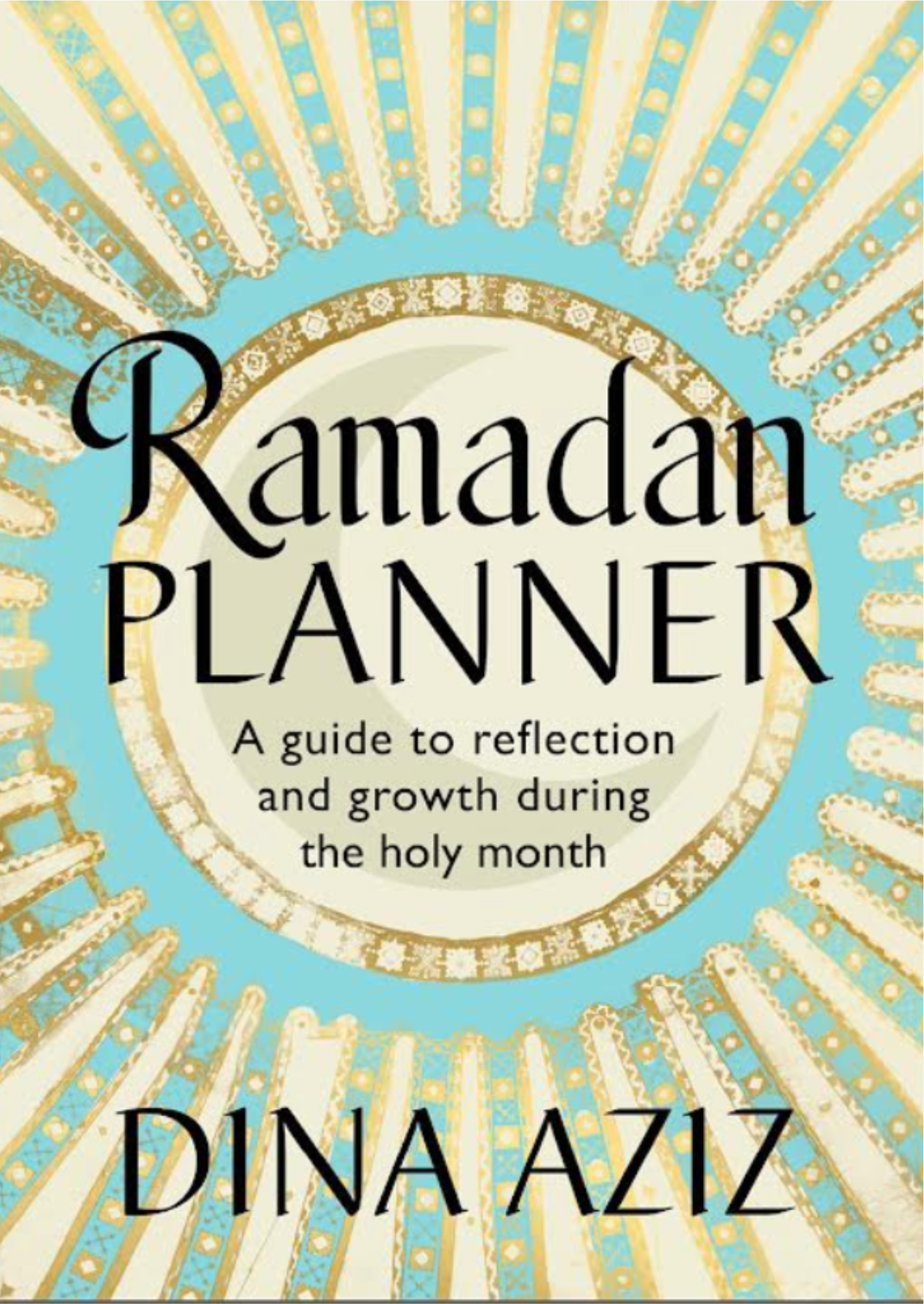
Published cover of Ramadan Planner.
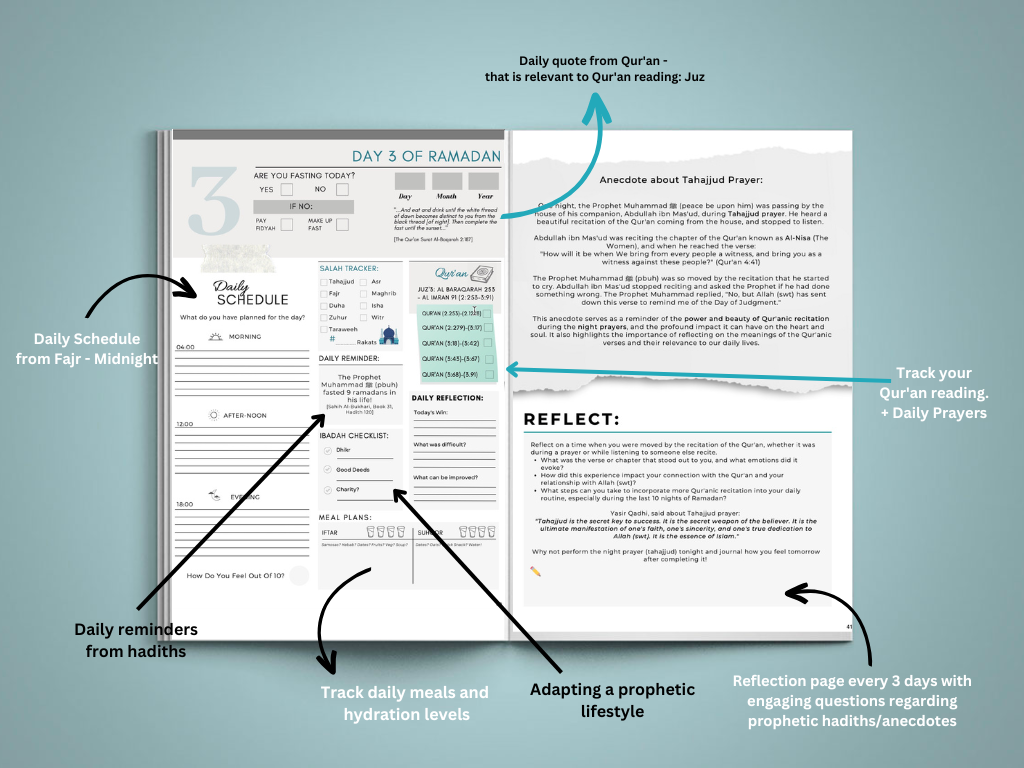
An inside spread showing the blend of schedule design, reflection prompts, Qur'an tracking and habit building.
Read the Hyphen interview
View the Penguin author page
More retailer links and media links
Real world traction
It reached people before it reached a publisher.
The strongest evidence for the planner was not a hypothetical persona. It was what happened after people actually received it. The first version spread through WhatsApp and university networks, then public sharing created a much larger feedback loop. Historic analytics I retained show more than 50,000 downloads from 1 million previews in 2020, followed by tracked downloads in later editions, alongside substantial social engagement and direct feedback.
Evidence boundary: these are historic platform and Orangdox figures I retained from the independent planner years. Sharing through WhatsApp, classroom printing and forwarded PDFs means total reach was not fully trackable, so I use the tracked figures rather than estimating a larger total.
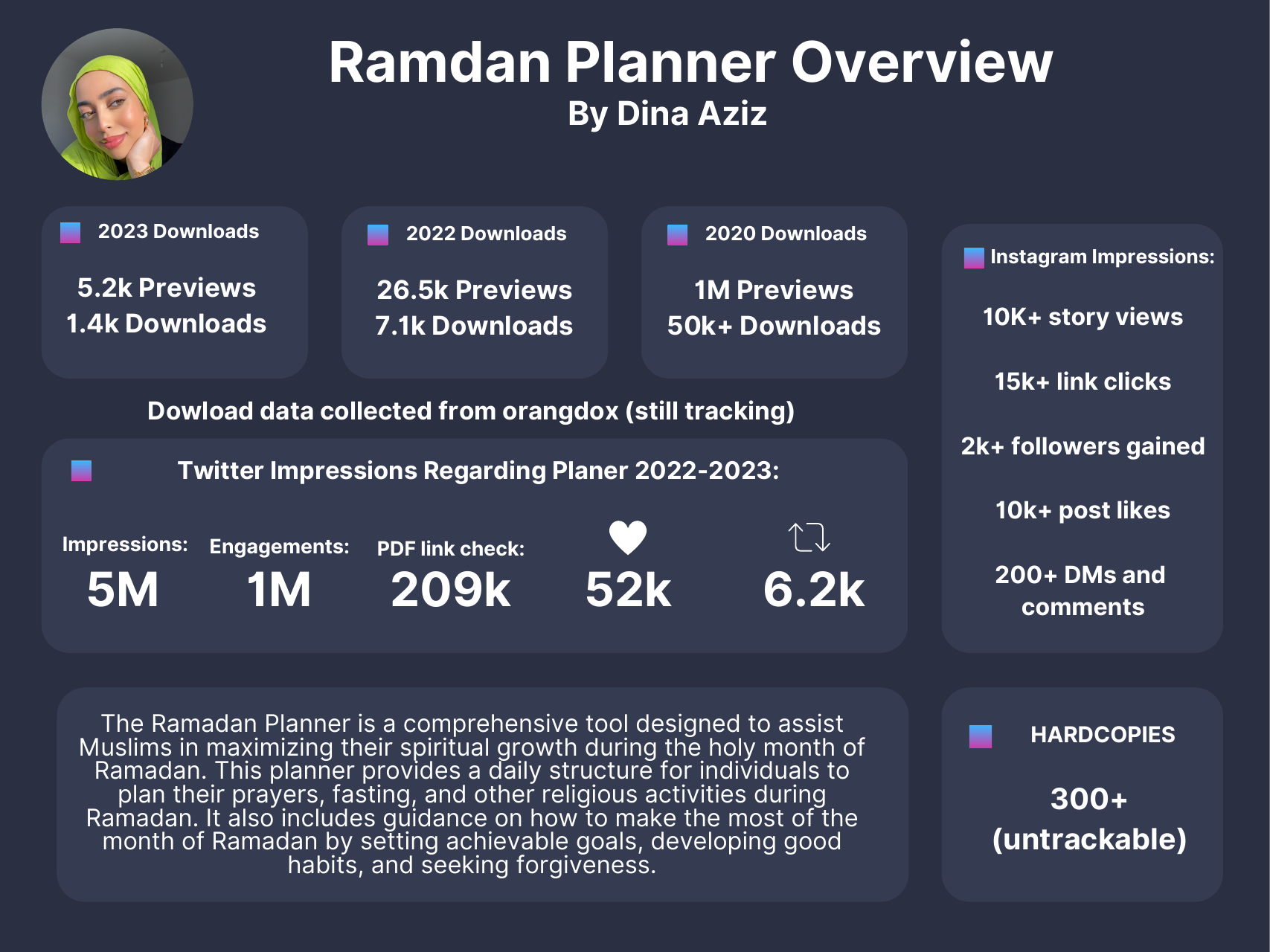
Historic analytics overview. The useful signal here is not virality for its own sake, but repeated evidence that people were finding, opening, downloading and sharing the planner.
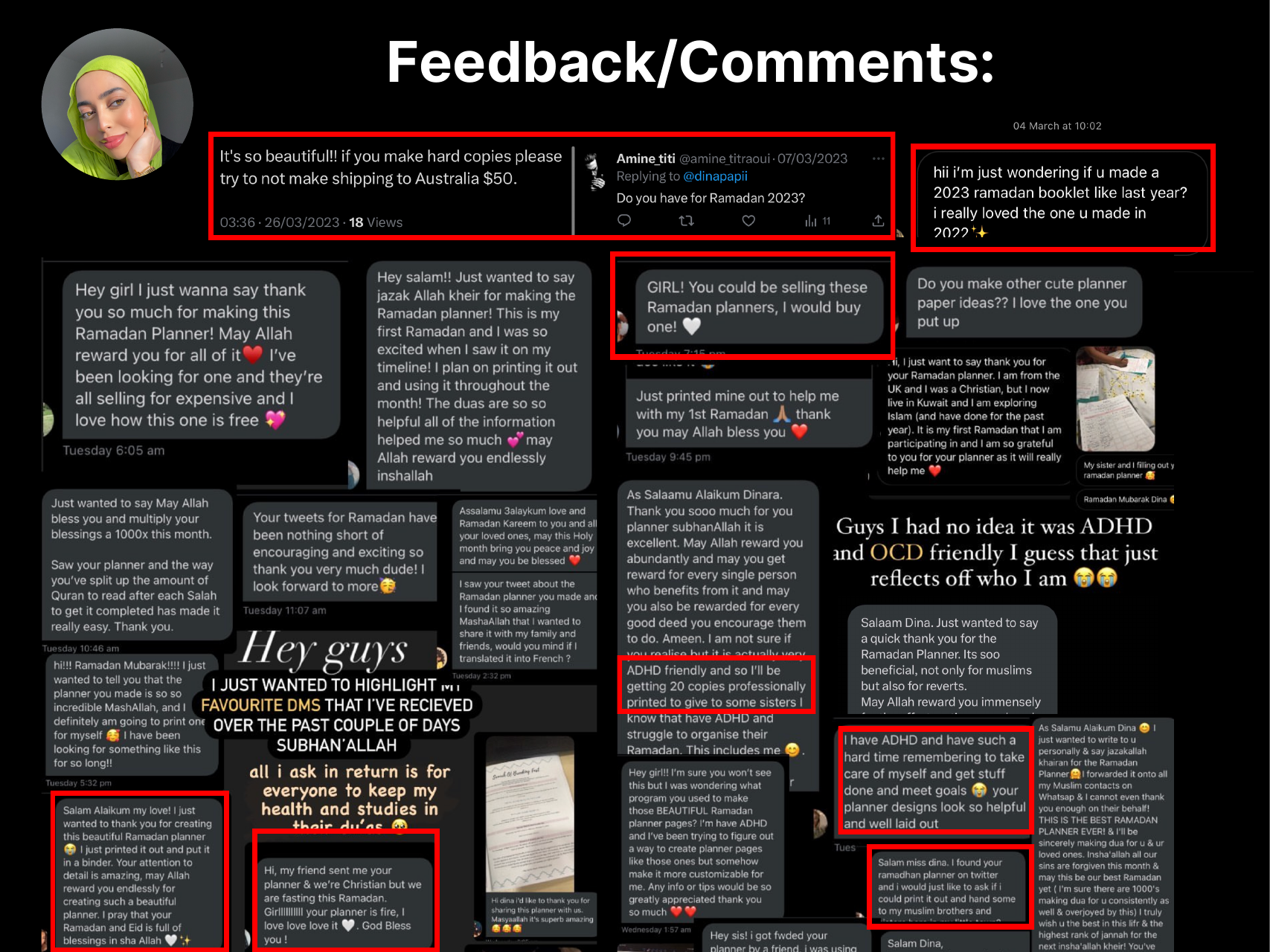
A sample of direct messages and comments. Feedback repeatedly mentioned printing the planner, returning for new editions and finding the structure useful for reverts and people with ADHD or OCD.
Iteration made visible
The early versions changed the system, not just the styling.
The original planner moved through roughly ten iterations in three days. The changes I describe here are the actual levers I was adjusting: hierarchy, colour, page structure and how much information appeared at once. The goal was to reduce the amount a user had to hold in their head while fasting and to make it easy to re enter the planner after an imperfect day.
What needs attention now?
I separated immediate daily actions from longer term goals so every page did not compete equally for attention.
Complete is not the same as usable.
I reduced how much content appeared at once and used repeated structures so the planner became easier to scan without losing depth.
A missed day should not break the system.
Goals, checklists, schedules, trackers and reflection prompts provide multiple routes back in instead of one fragile perfect routine.
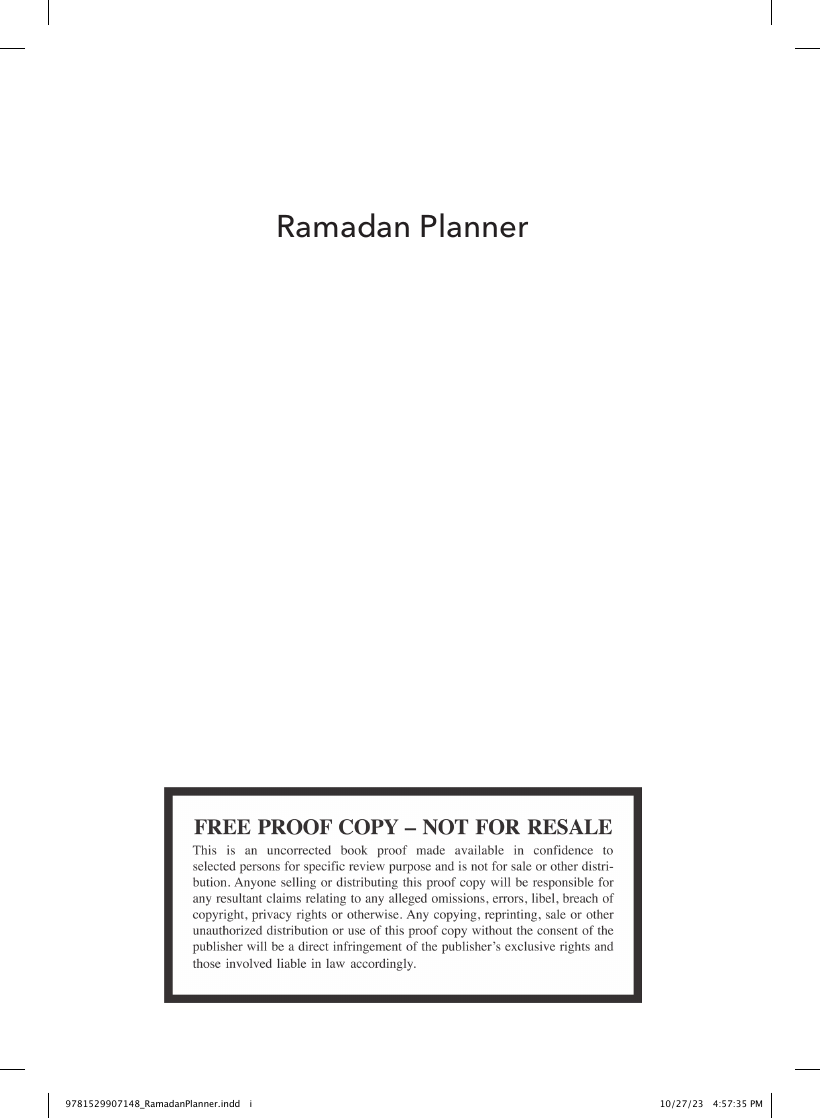
Publishing proof copy: evidence of the transition from an independently designed planner into the Penguin production process.
Final spread: repeated planning, reflection and tracking patterns working as one system rather than isolated page ideas.
Product decisions
Designed for different brains, not one perfect routine.
Multiple entry points
Goals, trackers, schedules, checklists and reflection prompts organise the same month in different ways so users can choose the structure that works that day.
Contextual content
Daily guidance follows the lived rhythm of fasting rather than serving generic reminders with no relationship to the day.
Emotional usability
Mood check ins create space for low energy and difficult days instead of designing only for the ideal user at peak motivation.
Iteration under constraint
Rapid early iteration established the core system quickly, then yearly revisions and the Penguin process refined it without losing the original accessibility intent.
Inclusive design in print
“Neurodivergent friendly” only means something if the design choices are concrete.
Predictable repetition
Daily structures repeat so the user does not need to relearn the interface every time they open the book.
Chunked information
Guidance, planning and reflection are separated into manageable groups instead of being presented as one dense page.
More than one route
Schedules, trackers, checklists and prompts support different planning styles and different energy levels rather than assuming one method will fit everyone.
Emotion without punishment
Daily check ins and re entry points avoid treating inconsistency as failure. The system is designed to remain useful after disruption.
Evidence boundary: these were deliberate inclusive design considerations in a print product. I am not presenting the book as formally accessibility audited or claiming that every neurodivergent user will experience it the same way.
External validation
From a community resource to a Penguin title and national press coverage.
The planner's growth also created an external record of the product story. British Muslim Magazine documented the original problem, the early sharing loop, the questionnaire I ran after demand emerged and the eventual transition to Penguin. Asian Voice later interviewed me about the planner's approach to reflection, mental wellbeing and inclusive support for people who are unable to fast. Cosmopolitan also included the book in its books by Muslim authors editorial.
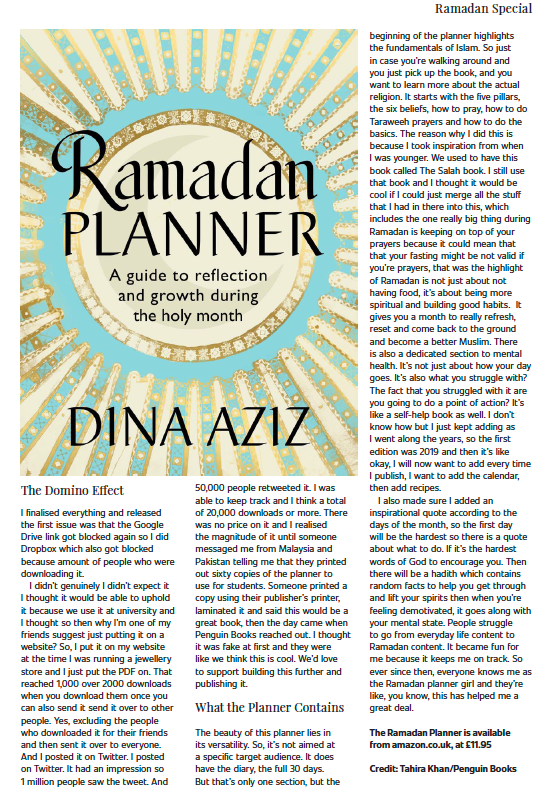
British Muslim Magazine print feature: the origin story, early demand, the domino effect of sharing and what the planner contains.
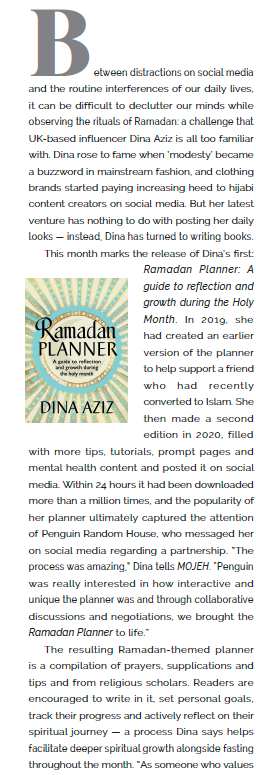
A second print excerpt documenting the planner's move from independent editions into a Penguin published book.
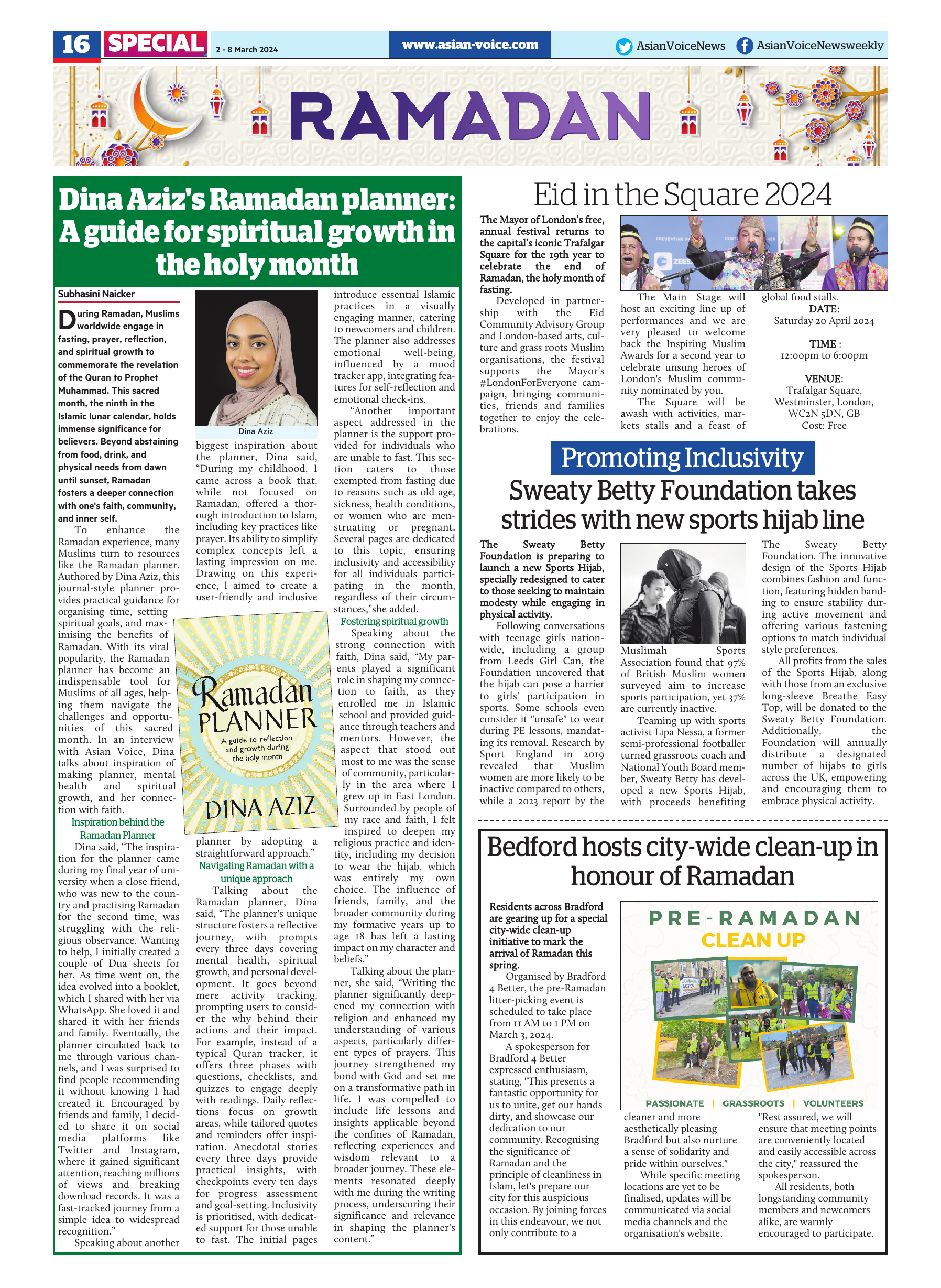
Asian Voice, Ramadan Special, March 2024. The feature focuses on the planner's reflective structure, mental health prompts, spiritual growth and inclusive design.
British Muslim MagazineMake the Plan for RamadanRead feature
Cosmopolitan UKBooks by Muslim AuthorsView editorial
HyphenInterview on the Ramadan PlannerRead interview
What this changed in the case study: the press is not being used as decoration. It corroborates the journey from an informal tool for one person, to organic demand, to iteration, to a professionally published product.
Why I describe this as product design
The output happens to be a book, but the work is recognisably product work: a specific user problem, information architecture, interaction through repeated daily use, rapid iteration, inclusive design decisions, stakeholder feedback, content systems and a real shipped outcome.
The lesson I carry into digital product design is simple: a system is usable when it supports the person on an imperfect day, not only when they follow the intended journey exactly.